LU Services
 League of Retired Professors
 News
News
 Vacancies
 International Relations
 Library
 Contact Us
 Email
Email


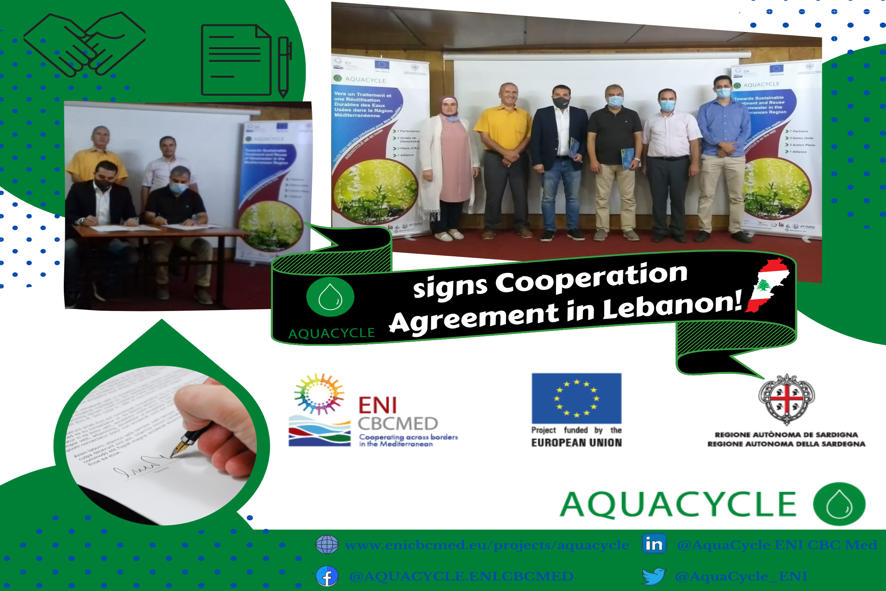
Cooperation agreement signed between the Lebanese University and "Sanabel" related to wastewater treatment and reuse of treated water in agricultural sector
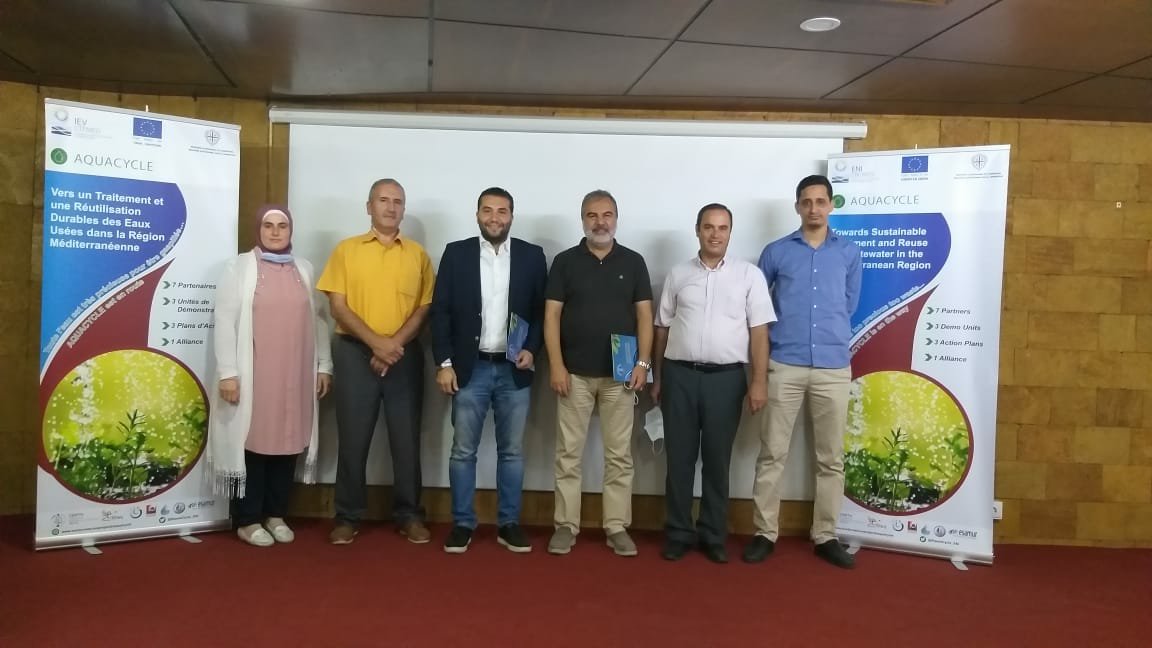
Within the framework of the EU-funded project “Aquacycle” and with the aim of preserving and developing natural resources in order to achieve sustainable development, the Lebanese University represented by Professor Fawaz El Omar, Dean of the Doctoral School of Science & Technology (DSST) and the “Real Estate Company for the Development of Tripoli North, SANABEL” represented by Attorney Rami Sharqieh, signed a cooperation agreement related to wastewater treatment and reuse of treated water in the agricultural sector for the housing project in Dedde, Koura.
The agreement was signed on 24 September 2020 at the “AZM centre for research in biotechnology and its applications” of the Lebanese University in Tripoli, in the presence of Dr. Mohamad Khalil, Director of the Center, Dr. Ahmad El Moll, Project Scientific Officer, and employees and researchers working on the project from the Center.
Professor El Omar emphasized that the Lebanese University continues to support innovations and targeted research in the environmental sector, namely in the field of waste investment and recycling. He pointed out that the agreement is the first of its kind in Lebanon to achieve sustainable management of environmental, social and economic impacts and reduce operational expenditures related to water, energy and waste.
He revealed that the duration of the project is three years, during which a plant will be established to treat and convert wastewater into arable water, which will contribute to supporting environmental activities, programs and projects in a manner consistent with the national plans implemented by several ministries such as agriculture, environment, energy and water.
He added that the project constitutes a start towards adopting the methodology of integrated and sustainable management of water resources in Lebanon. The project is summarized by building a model plant in Dedde, Koura that includes three parts, (a) Anaerobic digestion and transforming the resulting sludge into fertilizer for use in agriculture, (b) Construction Wetland to absorb plants grown according to special technologies, and (c) solar treatment plant, in which the remaining pollutants are removed and water becomes usable in the agricultural field according to international health standards and conditions.